




- Find the best broker for your trading needs
- Compare spreads, fees, and platforms
- Read in-depth reviews and analysis

Page Navigation


Select a different country or region to view content tailored to your location.

FxScouts helps traders across the globe by meticulously testing and reviewing online brokers and providing Forex education and market analysis. Our partners compensate us through paid advertising. While partners may pay to provide offers or be featured, they cannot pay to alter our recommendations, advice, ratings, or any other content. Our content and research teams do not participate in any advertising planning nor are they permitted access to advertising campaign data. For more detailed information click this link.

<p>Alison Heyerdahl is the Head of Content at FxScouts, a Chartered Market Technician (CMT), and an experienced trader, as well as a financial writer with extensive expertise in Forex trading, broker analysis, and market research. She has reviewed 100+ brokers, publishes weekly YouTube trading videos, and co-hosts the “Let’s Talk Forex” podcast.</p>

<p>Alison Heyerdahl is the Head of Content at FxScouts, a Chartered Market Technician (CMT), and an experienced trader, as well as a financial writer with extensive expertise in Forex trading, broker analysis, and market research. She has reviewed 100+ brokers, publishes weekly YouTube trading videos, and co-hosts the “Let’s Talk Forex” podcast.</p>
Chris manages the relationships with our partners to provide the best Forex trading experience possible for our users. Chris has 15+ years of research, and editorial and design experience for political and financial publications. His background has given him a deep understanding of international financial markets and the geopolitics that affect them.
The stock market offers an excellent starting point if you’re looking to trade or invest in financial markets. With a vast selection of stocks and high liquidity, this market provides ample opportunities to capitalise on price movements. One popular option is Stock CFD (Contract for Difference) trading, a form of derivative trading where you speculate on the price movements of company stocks without actually owning the underlying asset. This approach allows traders to take positions on both rising and falling stock prices, expanding profit potential in various market conditions. Plus, there’s an abundance of educational resources available to help you understand the forces that drive the market and the strategic approaches you can use to capitalise on price fluctuations.
Trusted. Transparent. Tested.
For over a decade, we’ve set the standard in forex broker reviews—collecting thousands of data points yearly to deliver unbiased, expert-backed insights.
Skip the trial and error! Below, you’ll find the best forex brokers for Australian traders for 2026—thoroughly tested, verified, and ranked, so you can trade with confidence.

Swipe to scroll
Broker | Official Site | Equities | Regulated By | Website Language: English | Support Language: English | Compare | ||||
|---|---|---|---|---|---|---|---|---|---|---|
 | Yes | 10000 | 10162 | AUD 100 |      | Yes | Yes | |||
 | Yes | 13000 | 19295 | AUD 0 |        | Yes | Yes | |||
 | Yes | 1300 | 1597 | AUD 100 |   | Yes | Yes | |||
 | Yes | 636 | 930 | AUD 100 |     | Yes | Yes | |||
 | Yes | 500 | 612 | USD 100 | | Yes | Yes | |||
 | Yes | 100 | 273 | AUD 0 |  | Yes | Yes | |||
 | Yes | 660 | 846 | AUD 100 | | Yes | Yes | |||
 | Yes | 110 | 247 | AUD 0 |  | Yes | Yes | |||
 | Yes | 2100 | 2240 | USD 200 | | Yes | Yes |











Select another broker to another broker to compare features, fees, and platforms side by side.
Find Your Ideal Forex Broker
Select another broker to another broker to compare features, fees, and platforms side by side.
0.0 pips
CMA, FSA-Seychelles, FSC, FSCA, ASIC
AUD 100
cTrader, MT4, TradingView, MT5, IRESS
30:1
Access over 10,000 share CFDs across Australian and international markets, providing ample opportunities for diversification.
Utilize MetaTrader 4, MetaTrader 5, and IRESS platforms, catering to both novice and professional traders with varying needs.
Benefit from tight spreads and low commissions, enhancing cost-efficiency in trading activities.
Trade with confidence under the regulation of the Australian Securities and Investments Commission (ASIC), ensuring a secure trading environment.
The IRESS platform may present a steep learning curve for beginners unfamiliar with advanced trading tools.
Accessing the IRESS platform requires a higher minimum deposit, which may not be suitable for all traders.
FP Markets | Best For: Active traders seeking deep market access and advanced trading tools
FxScouts
 YouTube
Select another broker to another broker to compare features, fees, and platforms side by side.
0.6 pips
BMA, CFTC, FINMA, FMA, BaFin, MAS, DFSA, FSA-Japan, FSCA, ASIC, FCA
AUD 0
MT4, TradingView, L2 Dealer
30:1
Trade over 17,000 markets, including a vast selection of share CFDs from global exchanges, offering unparalleled diversification.
Leverage IG's proprietary platform and mobile app, designed for intuitive navigation and efficient trading.
Access a wealth of educational materials, including webinars and tutorials, to enhance trading knowledge and skills.
Operate under the stringent regulations of ASIC, ensuring a secure and transparent trading environment.
Trading certain international markets may incur higher fees, affecting cost-efficiency for some traders.
The fee structure can be intricate, potentially causing confusion for new traders.

IG | Best For: Traders seeking a comprehensive range of markets with robust trading platforms
FxScouts
YouTube
Select another broker to another broker to compare features, fees, and platforms side by side.
0.0 pips
CMA, BaFin, SCB, DFSA, ASIC, CySEC, FCA
AUD 100
Pepperstone Platform, cTrader, MT4, TradingView, MT5
30:1
Benefit from razor-sharp pricing with low commissions, enhancing profitability for active traders.
Access MetaTrader 4, MetaTrader 5, and cTrader platforms, offering advanced tools and features for sophisticated trading strategies.
Experience rapid trade execution, crucial for high-frequency trading and scalping strategies.
Trade under the oversight of ASIC, ensuring adherence to strict regulatory standards.
The range of available share CFDs is narrower compared to some competitors, potentially limiting diversification.
Relies on third-party platforms, which may not offer the integrated features found in proprietary platforms.
Pepperstone | Best For: Traders looking for competitive pricing and advanced trading platforms
FxScouts
YouTube
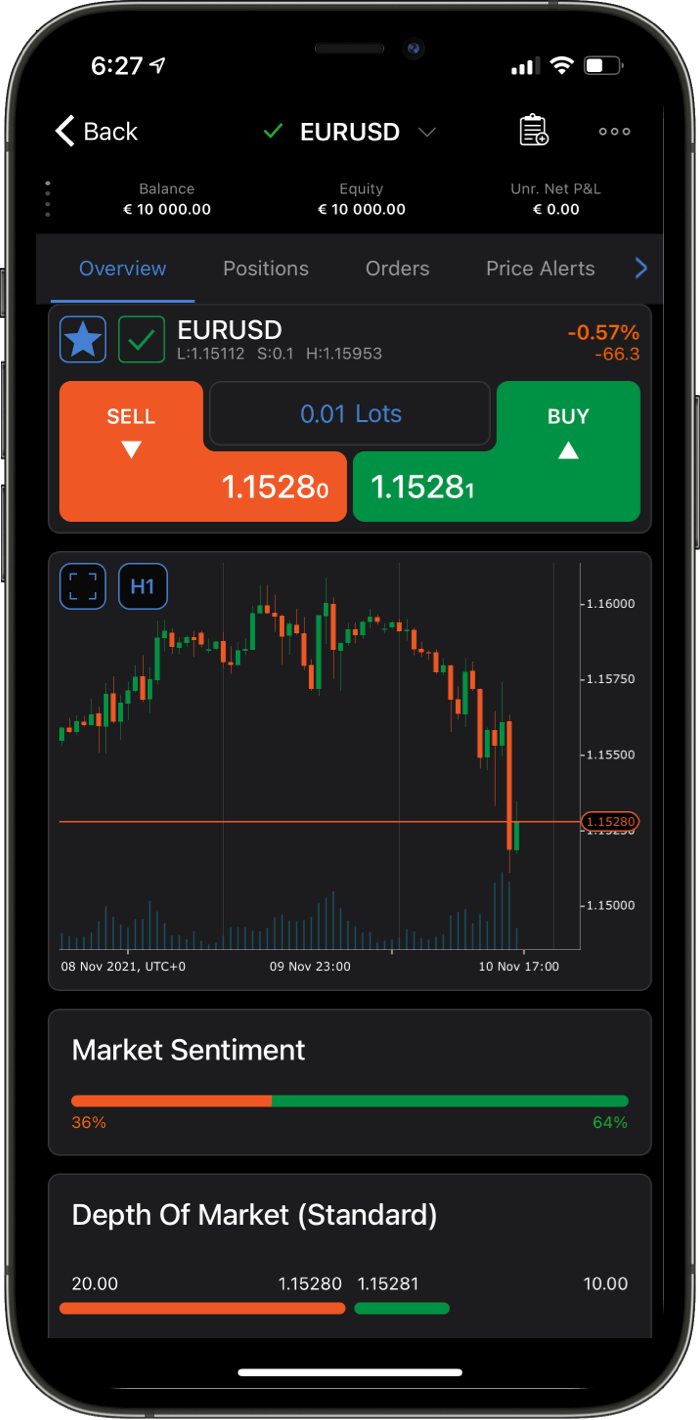
Select another broker to another broker to compare features, fees, and platforms side by side.
0.9 pips
ISA, FRSA, CBI, FSA-Japan, FSCA, ASIC, CySEC
AUD 100
MT4, MT5, AvaOptions, Avatrade Social
30:1
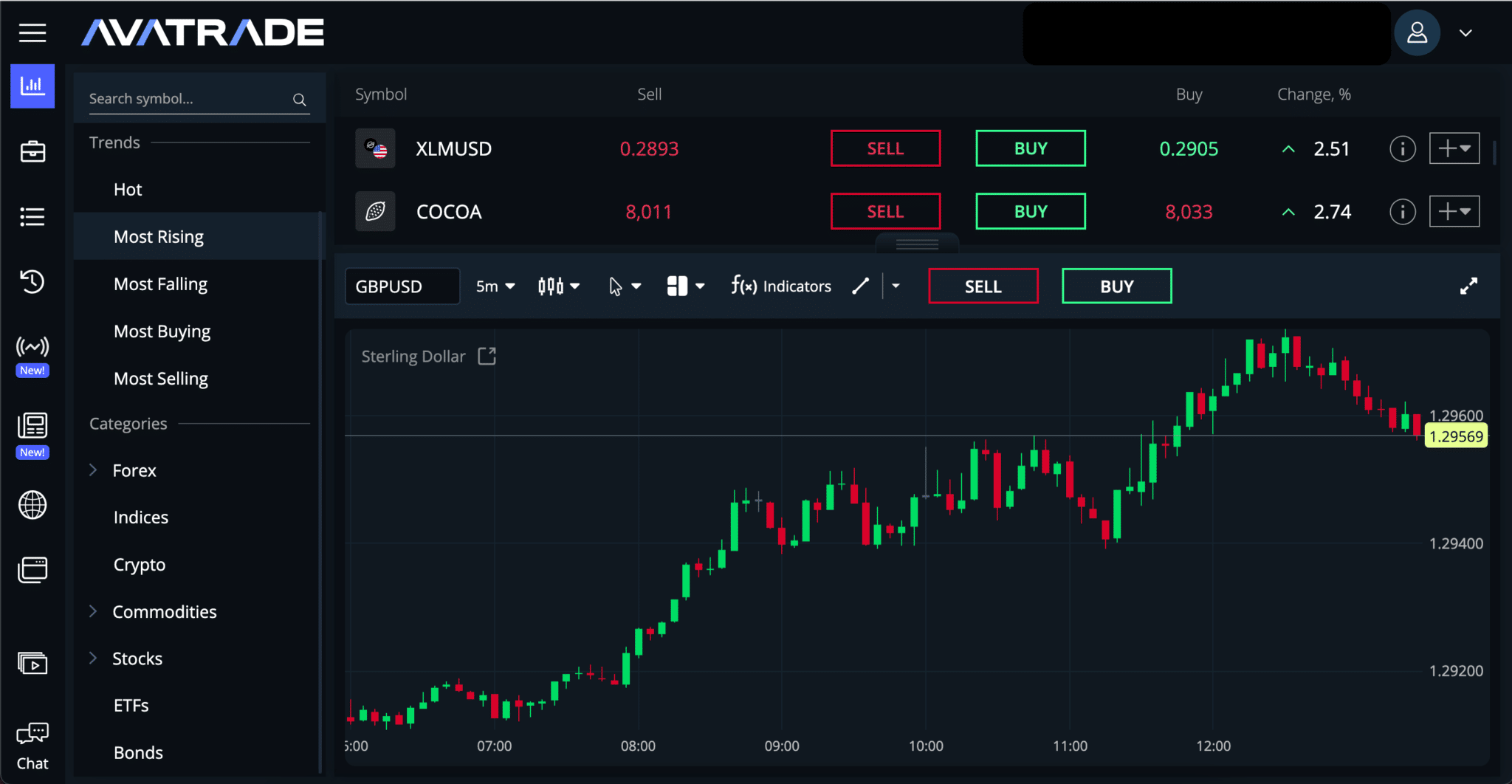
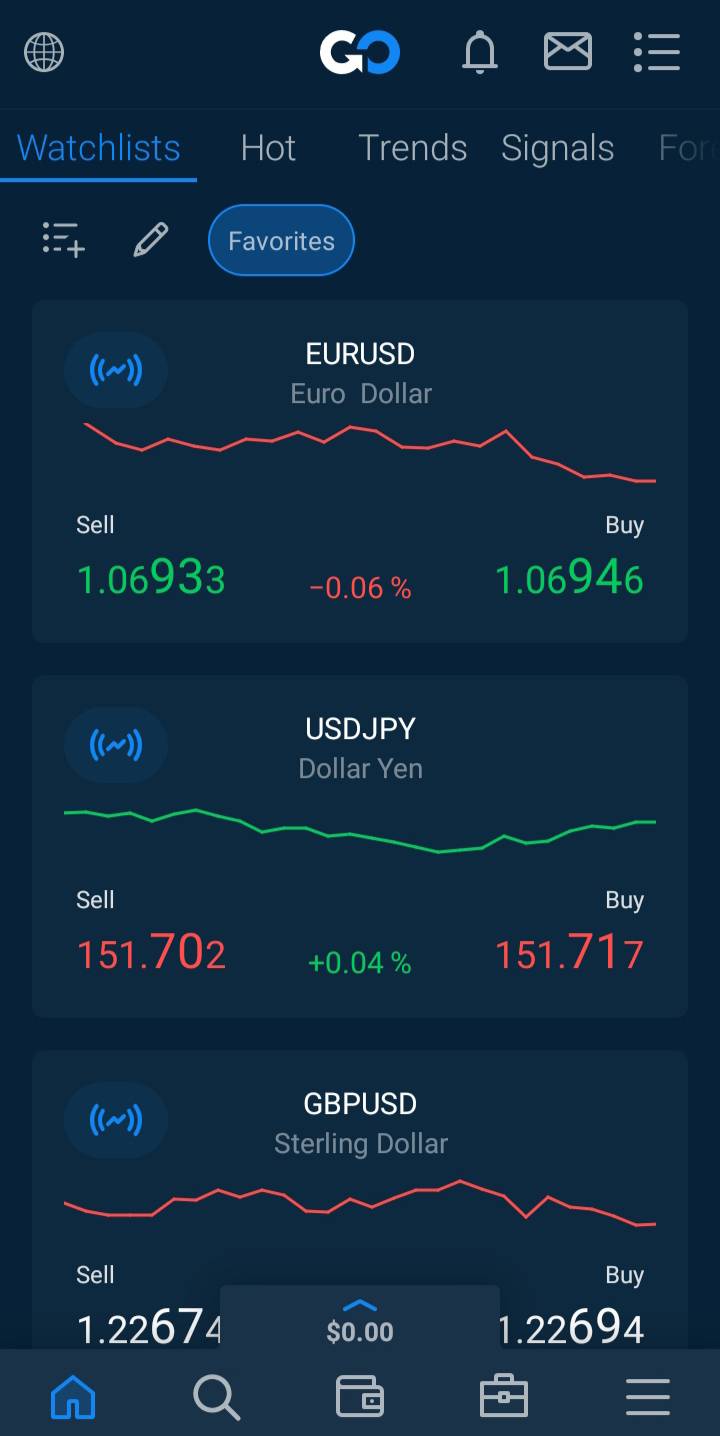
Access MetaTrader 4, MetaTrader 5, WebTrader, and AvaTradeGO, catering to various trading preferences and styles.
Benefit from a wealth of educational materials, including webinars, tutorials, and market analysis, supporting trader development.
Utilize tools like AvaProtect to manage risk effectively, providing peace of mind in volatile markets.
Trade under the supervision of ASIC, ensuring a secure and transparent trading environment.
The range of share CFDs may be narrower compared to some competitors, potentially limiting diversification.
Spreads on share CFDs may be higher, affecting cost-efficiency for active traders.
AvaTrade | Best For: Traders looking for a regulated broker with diverse trading platforms and educational resources
FxScouts
YouTube
Select another broker to another broker to compare features, fees, and platforms side by side.
0.0 pips
FSA-Seychelles, DFSA, FSCA, CySEC, FCA
USD 100
MT4, TradingView, MT5
500:1
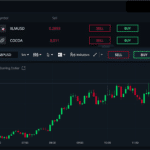
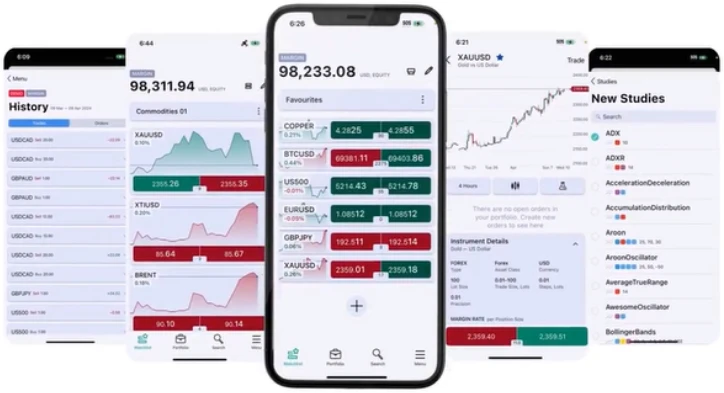
Tickmill lets you trade stock CFDs (and ETFs in the same section) via MetaTrader 5, which suits traders who prefer MT5’s order types, charting, and the ability to run EAs for semi-automated execution. Tickmill positions this as a “CFD Stocks and ETFs” offering on its MT5 stack.
Tickmill markets its stock/ETF CFD offering as “No Commissions,” which can be appealing if you prefer costs to be expressed mainly through the spread rather than an explicit per-trade share-CFD commission line item.
Tickmill highlights dividend payments on its stocks/ETFs CFD offering. For Australian traders used to equity-style cashflows, this matters because dividend adjustments can meaningfully affect the economics of holding a share CFD across ex-dividend dates.
Tickmill advertises a low average execution time and states that “all trading strategies” are enabled for its stock/ETF CFDs, which is useful if you trade around earnings, macro events, or prefer more active styles where execution quality matters.
Tickmill provides a consolidated licences-and-regulation page listing its regulated entities by jurisdiction. For Australians, that transparency is valuable because your practical protections depend on which Tickmill entity you actually contract with.
Tickmill’s own licences-and-regulation disclosure focuses on non-ASIC regulators. If you are an Australian retail trader specifically wanting ASIC-regulated CFD protections (for example, the ASIC product intervention framework), Tickmill may not match that preference depending on the entity you join.
ASIC’s CFD product intervention rules apply to CFDs issued to Australian retail clients by Australian-regulated providers. If you trade via an offshore Tickmill entity, you should assume the ASIC retail CFD guardrails (like leverage limits and certain inducement restrictions) may not apply in the same way.
Tickmill promotes “top corporations” for stock CFDs, but it is not clearly positioned as an Australia-first share CFD venue with deep ASX coverage. If your priority is extensive Australian equities, you may want a broker that explicitly markets AU share CFDs as a core product.

Tickmill | Australian traders who want to trade global stock and ETF CFDs on MT5 with simple, low-friction pricing
FxScouts
YouTube
Select another broker to another broker to compare features, fees, and platforms side by side.


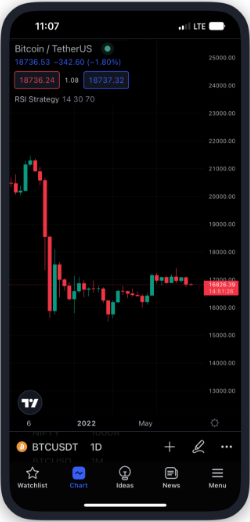
Stocks, also called shares or equities, are issued by companies to raise capital for business investment. Investors who buy stocks gain a stake in the company, a share of profits as dividends, and voting rights at shareholder meetings.
Once shares have been issued in what is called the “primary market”, they are traded on stock exchanges, or the “secondary market,” where their price moves in response to various factors. Stock prices fluctuate, sometimes significantly, throughout the day; stocks in large companies are traded around the clock on the world’s major stock exchanges. It is possible to make a living buying and selling stocks. You only need an account with a broker and a laptop, desktop or mobile device to access the broker’s platform.
There are a huge number and variety of stocks listed on the world’s major stock markets, ranging from small, newly formed businesses to long-established giants whose brands are household names. They cover all economic activities and regions. The total worldwide value of equity trading in 2023 was US$130 trillion, so the market in many stocks is vast and highly liquid, i.e., it is easy to buy and sell stocks.
Contracts for Difference (CFDs) are one of the most popular ways of trading stocks, and it is easy to see why, given all the advantages they offer. CFDs allow traders to bet on short-term price movements in various financial assets, from currencies to stocks to commodities, without actually owning or taking physical delivery of the assets. They are contracts between a buyer (such as an individual trader) and a seller (such as a broker, investment bank or spread-betting firm), under which the two parties agree to exchange the difference in the value of an underlying financial instrument between the time the contract opens and the time it closes – often over less than one day.
CFDs benefit from several features that make them uniquely valuable to individual traders.
A CFD is a derivative product because it derives its price from an underlying instrument or product. CFDs allow you to trade the underlying asset (e.g. the Microsoft share price) without taking physical ownership of the stock.
Moreover, CFDs are leveraged products, so you don’t have to deposit the total value of a trade to open a position. The deposit is called your margin, and CFDs tend to come with high leverage levels, which translates into low margin requirements. So, if your broker offers you 50:1 leverage on a US$50,000 CFD position in Microsoft, you must deposit only US$1000 into your account to open the full US$50,000 contract. This means you can gain significant exposure to Microsoft or any other stock for only a fraction of the amount you would need to buy the stock outright.
For example, imagine that a trader believes the price of ACME is about to go up. They enter into a contract with a CFD broker, agreeing to buy US$50,000 in an ACME stock CFD contract. But the broker lets the trader put up just 5 per cent of the US$50,000 overall contract value, or US$2500. (In this example, the broker is offering 20:1 leverage.) The price of ACME’s stock increases by 10 per cent during the day, so the contract’s overall value rises to US$55,000, giving the trader an overall profit of US$5000, or double their US$2500 outlay.
You can use CFDs to bet that the price of a stock will rise (called going “long” in the jargon) or that it will fall (a “short” position). The latter involves selling CFDs you don’t actually own and then buying them after the price drops so that you can complete the contract you made to sell them at the higher initial price.
Suppose you believe the price of ABC stock will fall. You agree to sell a US$50,000 ABC stock CFD contract in the belief that you will be able to buy it back later in the day at a lower price. Again, you do so using the 20:1 leverage the broker offers, so your initial outlay is just US$2500. By the end of the trading day, the price of ABC has indeed fallen, and the CFD contract is now worth US$45,000. That is when you step in and buy to fulfil your earlier agreement to sell the contract at US$50,000. Again, you have made US$5000, or double your initial outlay.
Moreover, there are no limits on using CFDs to short financial instruments. By contrast, some markets in particular instruments have rules that prohibit shorting or require the trader to borrow the instrument before selling short, or have different margin requirements for short and long positions, making it difficult to balance positions.
You can close a position at any time during the trading day. This means that you can hold a position for as long as you want, be it seconds, minutes or hours. You can even hold a position overnight, although there will be a charge for doing so.
Moreover, many brokers offer a variety of options when it comes to trade size, allowing a wide range of traders to access the market. This includes beginners and casual traders seeking to experiment with investment strategies while limiting their risk by focusing on small trades.
Most people are familiar with the term “hedging your bets” and understand that it involves offsetting risks. Well, it means exactly the same thing in the financial world and is derived from the age-old idea of using a hedge – or fence – as a means of protection. In this instance, you can use CFDs to offset your trading positions by balancing trades in case your beliefs about whether those initial positions are likely to rise or fall prove wrong.
CFDs are ideal hedging tools because you can use them to bet that an instrument will rise or fall at a relatively low cost. So, you can take a long position in ABC stock that will profit should the price rise while taking out a short position that will prove profitable should the price fall. In other words, instead of selling ABC stock at a loss should your expectation of the price moving higher prove wrong (and draining your limited financial resources in the process), you can open an additional short position that will generate earnings to help offset any losses from your initial position.
You can also use CFDs to insure against a rise or fall in any investment you have other than CFDs. Suppose, for example, you have a standard portfolio of global stocks that you wish to keep invested for the long term. Now imagine you anticipate that global stock markets will soon encounter turbulence and fall sharply before correcting. You could sell all the stocks in your portfolio in the belief that you’ll be able to buy them back at a much lower price. But that could prove costly in terms of transaction expenses and taxes, and it is risky: global stocks might rise sharply and you might not then be able to buy them back at a lower cost.
Alternatively, an investor fearing a market correction could short-sell an equivalent amount of CFDs in the same stocks, enabling them to take advantage of the short-term downtrend. At the same time, the investor continues to hold the stocks within the investment portfolio in the belief that they will thrive in the long term.
Stock CFD trading requires a considerable commitment. It takes time to learn how to trade profitably, and when you start to trade you may have to spend many hours per day on your computer screen following and researching what is happening in the market – and why – in preparation for your trading day. When that day is finished, you will need to analyse what happened and why your trading activities succeeded or failed, so that you can apply the lessons learnt to the next day’s trading. There could be days when you lose money and it is easy to become disheartened. There is certainly no guarantee of success.
Stock CFD trading can also be risky. You may lose money or you may simply find that it is not something you like or have the temperament for. You have to be patient, for example, when waiting for opportunities to arise, and the market can experience bouts of extreme volatility that you may find highly stressful.
Leverage is a double-edged sword. Suppose, using the earlier example, you agree to buy US$50,000 in a stock CFD contract, and the broker lets you put up just 5 per cent of the overall contract value, or US$2500. However, this time the stock price falls by 10 per cent, so the overall value of the contract drops to US$45,000. Now you have turned your US$2500 outlay into a whopping US$5000 loss.
Moreover, if the capital in your account falls below a certain level, you may be subject to a “margin call”, where the broker asks you to put up additional funds to balance the account. If you fail to do so, the broker may close your positions, so crystallising your losses.
You can protect against potential losses to a certain degree. Brokers such as CMC Markets, for example, incorporate negative-balance protection into retail accounts, so your losses will be limited to the value of the funds in your account.
You need to be alert to changes in your position at all times. Market volatility and rapid changes in price – which could arise outside normal business hours if you are trading international markets – can cause the balance of your account to change quickly. Your positions will be automatically closed if you do not have sufficient funds in your account to cover these situations.
Financial markets can be very volatile, and the prices of financial instruments can rise or fall precipitately at times, jumping to a much lower or higher price rather than moving gradually. This is called gapping, and it can have a significant impact on traders.
For example, traders may use stop-loss orders to limit losses. This involves specifying a price at which your position closes out if an instrument’s price goes against you. When gapping occurs, however, those stop-loss orders may be executed at unfavourable prices – either higher or lower than you may have anticipated, depending on the direction of your trade.
Because the cost of trading equity CFDs is low due to leverage, it is easy for investors to be lulled into a false sense of security and take on more trades than is prudent. This can leave them overexposed to the markets at any given time, so their remaining capital would be insufficient to cover losses across the portfolio. If multiple positions go wrong, it can spell financial ruin for those who adopt a less-than-cautious approach to CFD trading.
There are several fees and costs associated with trading stock CFDs. As explained earlier, when you open a CFD trade, you must pay a portion of its full value upfront. This deposit is called the margin, and the percentage you have to pay on the trade’s overall value will affect your trading’s affordability.
The costs of CFD trading include the broker’s commission and the spread, which is the difference between the bid and offer prices at the time of trading.
When you buy or sell a CFD on stocks, a commission (normally around 0.10 percent) is charged. The commission charge varies depending on the country where the stock product originates.
However, commissions are not charged on other products, such as CFDs on foreign currency, indices, cryptocurrencies, commodities (e.g. gold) and treasury instruments.
The spread is how the broker earns money when dealing in non-stock CFDs. It is simply the difference between the price at which you can buy a CFD and the price at which you can sell that same CFD at the same moment. The price at which you buy (bid price) is always higher than the price you sell (ask price), and the underlying market price will generally be in the middle of these two prices. Trading spreads add costs to a trade and fluctuate along with an asset’s price and trading volume.
If you hold a long position, you will also be charged interest to hold that position overnight. This is referred to as a financing charge and is calculated as the current overnight interest rate the major banks charges plus 2 to 3 per cent. If you hold a short position overnight, you will receive a payment of the current overnight interest rate minus 2 to 3 per cent.
You will be charged extra if you keep a position open over the weekend instead of overnight.
Some brokers may charge a fee to withdraw money. eToro, for example, charges US$5 for withdrawals “to cover some of the expenses involved in international money transfers.” The fee may vary depending on the currency involved. Some brokers may offer a set number of free withdrawals per month.
Some brokers charge a fee to convert one currency into another. eToro gives an example of around US$10 for converting a deposit of £2000 into US dollars.
A fee may be charged if an account goes unused for a set period. One broker, for example, charges a US$10 monthly inactivity fee on any remaining available balance if there has been no login activity for more than 12 months.
This strategy involves trading based on news and market expectations before and after news releases. You will have to act quickly and make a quick judgement on how to trade a new announcement or piece of data. You will also have to be able to judge whether the news is already factored into the stock price and whether the news matches investor expectations.
The advantage of this strategy is that corporate economic and political news happens constantly, so there are always possible trading opportunities. The disadvantage is that you need considerable expertise in how markets operate and how to interpret data and news.
This style of trading requires less time commitment than other strategies because one only needs to study charts at their opening and closing times.
End-of-day trading involves buying or selling near the close of the market when it becomes clear that the price will “settle”. The strategy focuses on studying the current day’s price compared with the previous day’s price movements, and using that as a guide to how the market will likely move. Traders can use various tools to limit their overnight risk, such as setting a take-profit order or a stop-loss limit.
Some traders believe that prices for stocks (and other financial instruments) move in particular patterns. They rely on indicators to determine when a trend is taking hold and then trade on the basis that that trend will continue.
Technical-analysis traders begin by seeking to understand where the price is heading according to the fundamentals of supply and demand. (For example, if we are in a period of rising interest rates, the price of stocks will probably fall since those higher borrowing costs will cool economic activity.) They then use charts that detail previous highs and lows, trend lines, and patterns.
When the price of a stock is rising, a significant previous high above the current level will be an obvious target, as will an important previous low when the price is falling. Also, in an uptrend, a line on the chart connecting previous highs will act as resistance when above the current level, while a line connecting previous lows will act as support – with the reverse true in a falling market.
Swing trading is a style of trading that focuses on short-term trends in stocks (or other financial instruments) over a period of a few days to several weeks. Swing traders rely on technical analysis to find trading opportunities and then focus on taking small gains and cutting their losses quickly. If this is done consistently over time, relatively small gains can compound into excellent annual returns.
Swing traders should focus on the most actively traded stocks that show a tendency to swing within broad, well-defined limits. It’s a good idea to focus on a select group of stocks and ETFs, and monitor them daily, so that you understand the price action they generally exhibit.
According to the investment broker Fidelity, there are a number of ways to capitalise on market swings. The company says that some traders opt to trade after the market has confirmed a change of direction, and trade with the developing momentum. But others, it adds, may “choose to enter the market on the long side after the market has dropped to the lower band of its price channel—in other words, buying short-term weakness and selling short-term strength”. Both approaches, says Fidelity, can be profitable if implemented with skill and discipline over time.
This strategy can be deployed across a range of financial instruments, including stocks. This is a strategy that is very popular with short-term traders. It runs counter to the old stock-market adage that you should “buy low and sell high”, focusing instead on buying high and selling even higher.
Momentum trading focuses on price action and price movements, seeking to capitalise on a new directional trend, rather than fundamental factors such as company results or economic growth. For example, if a stock suddenly surges upwards after the company announces unexpectedly strong profit growth, a momentum trader might try to buy stocks and ride the stock’s price higher.
Traders can make consistent profits from trading stocks, but preparation is key. Follow these tips and you will maximise your chances of trading stocks successfully.
All good brokers offer demo accounts where you can practise trading using virtual money. You can learn how the market works, how to place buy and sell orders, how to deploy strategies, etc., at no risk to yourself. Do this for as long as you can. If you are consistently making a profit, it might be time to sign up for a real account.
Good brokers offer lots of educational material on their platforms. There is also much material on the internet – including videos and examples of trades – that can help you learn all you need to know to trade successfully.
Trading can be very stressful. Using a demo account can help you decide whether the stress of losing money is for you or not. It is important to keep your cool when the market turns against you, know when to exit a position, and accept your losses.

Find answers to the most common questions about trading stock CFDs online.
Sign up with a broker and you can begin trading stocks via their platforms, which are accessible through mobile and web-based apps.
A whole range of factors move markets: from company-specific news concerning the health of the underlying business, management changes, the launch of new products and the fortunes of competitors, to wider developments such as the general state of the economy and society. New technological developments can also create opportunities for new businesses and threaten existing firms.
You can trade around the clock, five days a week, across the major global markets, such as the New York, London, Hong Kong and Tokyo stock exchanges.
You can trade in or invest in stocks either directly (by buying the stock itself) or through other instruments, such as options, futures and CFDs. Or you can trade the whole market or a particular segment of it via ETFs.
Yes, you can profit from falling stock prices through CFDs.
In Australia, the maximum leverage for trading stock CFDs is 20:1, although offshore brokers may offer higher levels of leverage.
You can sometimes open an account with 100 AUD or even less.
Curious about the latest in forex? You’re not alone. Many traders and investors are digging deeper into these topics to refine their strategies and understanding. Here’s a curated selection of “others also viewed” articles, offering a range of perspectives and insights that could prove valuable for your own forex journey.

Good Forex brokers for beginners will help their clients get started. These are the best Forex brokers for beginners in Australia for 2026.

Which broker offers the lowest spreads? We compare Forex spreads across 160+ regulated Forex brokers accepting Australian clients using the latest data.

Find the best brokers for trading the VIX, offering precise execution, low fees, and advanced tools to capitalise on market volatility.
60-90% of retail traders lose money trading Forex and CFDs. You should consider whether you understand how CFDs and leveraged trading work and if you can afford the high risk of losing your money. We may receive compensation when you click on links to products we review. Please read our advertising disclosure. By using this website, you agree to our Terms of Service.
Partner Manager and Financial Writer
Head of Content
Financial Writer



Welcome to the FxScouts community! We’re thrilled to have you on board. You’ve successfully signed up for our forex newsletter, where you’ll receive expert insights, market analysis, and the latest news straight to your inbox.
Get ready to stay ahead of the curve with our regular updates designed to help you make informed trading decisions.
Happy trading!
The FxScouts Team